
A Guide for Albertans Considering Denture Options
Losing teeth — whether due to decay, trauma, or age-related wear — can impact not only your smile but also your overall health, nutrition, and confidence. One of the first questions many patients ask is: “Should I get partial dentures or full dentures?” At Woodside Denture Centre, we help you answer this question based on your oral health, lifestyle needs, and long-term wellbeing.
This comprehensive guide explains the differences between partial and complete dentures, how each supports oral health and quality of life, and how to choose the best modern dentures option in Alberta.
Understanding Dentures: Basics and Purpose
Dentures are custom-made removable prosthetics designed to replace missing teeth. They help restore:
- Chewing ability — improving digestion and nutrition
- Clear speech — by supporting lips and tongue positioning
- Facial structure — preventing the “sunken” look caused by tooth loss
- Oral health — by reducing bite imbalances and protecting remaining teeth
- Confidence and quality of life
Whether you need a partial or full set depends on how many natural teeth remain and your overall oral condition.
What Are Partial Dentures?
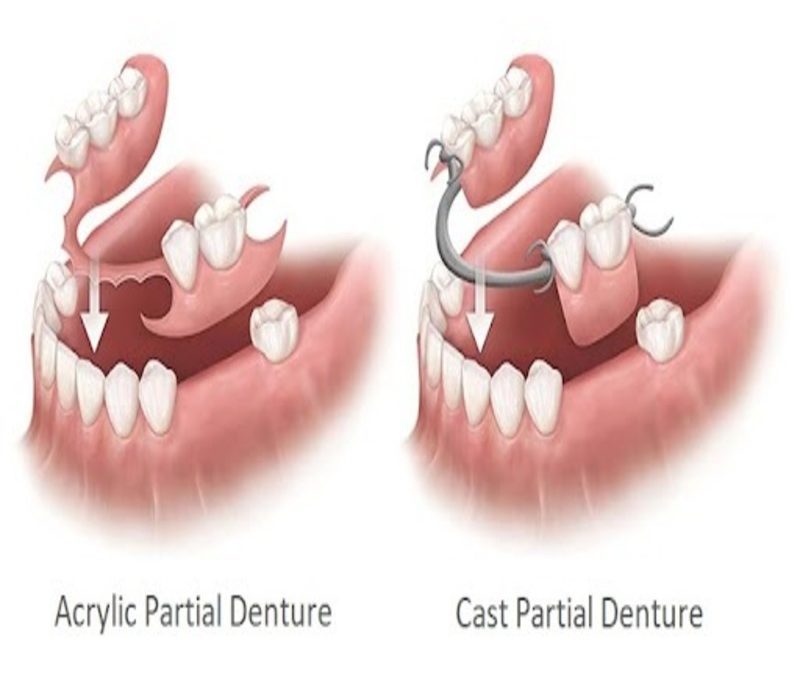
Partial dentures are designed for patients who still have remaining natural teeth – filling in the gaps where teeth where once present.
Key Features
- Support from natural teeth: Partials often use clasps or precision attachments to anchor to adjacent healthy teeth.
- Maintain alignment: They prevent remaining teeth from drifting into empty spaces, helping preserve your bite and jaw alignment.
- Removable for hygiene: Partials can be taken out for daily cleaning, allowing improved maintenance of gums and neighboring natural teeth.
- Flexible and adaptable: Modern partial dentures can be customized with metal frameworks, flexible materials, or acrylic bases based on comfort and lifestyle.
Health & Wellness Benefits
- Preserves remaining natural teeth: By stabilizing your bite, partials reduce stress on healthy teeth.
- Supports gum health: Easy removal for cleaning helps prevent gum disease and plaque buildup.
- Improves digestion: Restored chewing function supports better food breakdown and nutrient absorption.
Ideal Candidates
Partial dentures might be right for you if:
- You have several missing teeth but retain multiple healthy ones.
- You want a non-invasive, cost-effective solution without surgery.
- You are seeking a transitional option while considering future implant-based solutions.
What Are Complete Dentures?
Complete dentures replace an entire set of teeth in either the upper or lower jaw — or both — when all natural teeth are missing or cannot be preserved.
Key Features
- Full-arch replacement: They sit directly on the gums and are custom moulded for comfort and fit.
- Removable: Designed to be taken out daily for cleaning and overnight rest.
- Aesthetic support: Full dentures enhance facial structure and provide a natural looking smile.
Health & Wellness Benefits
- Comprehensive restoration: Ideal when remaining teeth are gone or are not salvageable.
- Speech and chewing function: Full dentures help you enjoy a wider range of foods and speak with clarity.
- Confidence boost: A complete smile can have significant psychological and social benefits.
Ideal Candidates
Complete dentures may be appropriate if:
- You have lost all teeth in one or both arches.
- Tooth decay or gum disease has compromised some or all remaining natural teeth.
- A balanced approach to restoring ability to eat with a new smile.
Partial vs. Complete Dentures: Comparative Overview
| Feature | Partial Dentures | Full Dentures |
| Natural teeth required | Yes | No |
| Bite support from remaining teeth | Yes | No |
| Prevents adjacent tooth movement | Yes | N/A |
| Ideal for multiple missing teeth | Yes (but not all) | Yes (all) |
| Comfort adaptation period | Typically, shorter | Slightly longer |
Both types play a significant role in oral wellness, but the right choice depends on your dental health, goals, lifestyle, and budget.
Health Considerations & Long-term Wellness of Complete Dentures
Jawbone & Tissue Health
Missing teeth can contribute to bone loss over time and changes in facial structure. Dentures help mitigate these changes by supporting tissue and distributing bite forces. Regular check‑ups ensure proper fit and prevent issues like gum irritation or sore spots.
Nutrition & Digestion
Inadequate chewing function affects digestion and nutrient absorption. Both partial and complete dentures restore chewing ability, allowing you to eat a balanced diet and maintain digestive health.
Confidence
Tooth loss can affect self-esteem, speech clarity, and willingness to engage socially. Choosing the right denture solution restores your confidence and enhances quality of life.
Cost & Accessibility in Alberta
Understanding cost expectations is a common concern for Alberta patients. Denture prices vary depending on type, materials, customization level, Full denture, partial denture, framework and complexity — may change the pricing.
Programs such as DASP and CDCP may provide financial support for denture services, including both partial and full dentures, through available Alberta dental benefits.
How Woodside Denture Centre Helps You Decide
At Woodside Denture Centre, our denturists conduct a comprehensive oral assessment and offer added services such as denture engraving for patient safety and identification.
- Number of missing teeth
- Gum and bone health
- Your comfort and lifestyle preferences
- Long‑term oral wellness goals
Our goal is to provide a solution that not only restores your smile but also supports overall health and function.
Frequently Asked Questions (FAQ)
What’s the main difference between partial and complete dentures?
Partial dentures replace one or several missing teeth and rely on remaining natural teeth for support, while complete dentures are used when all teeth in a jaw are missing.
Are dentures comfortable?
Most patients usually adapt to their new dentures within a few weeks; However, consistent check-ups every year are recommended to allow our team to assess any changes that occur over time.
How long do dentures last?
With proper care, dentures typically last 5–7 years. Changes in gum and jawbone structure can necessitate relines or replacements over time.
Can I switch from partial to full dentures later?
Yes. If changing oral health needs requires it, your denturist can recommend adjusting your treatment plan accordingly.
Final Thoughts
Choosing between partial dentures and complete dentures is a personal decision rooted in both dental health and lifestyle. At Woodside Denture Centre, we prioritize education, long-term wellness, and solutions tailored to each patient’s needs.
If you’re unsure which option is ideal for you, schedule a consultation with our experienced denture team. We’ll review your situation and help you make an informed decision — because your smile and health are worth it.